WEAR INDICATOR
The tab that squeals
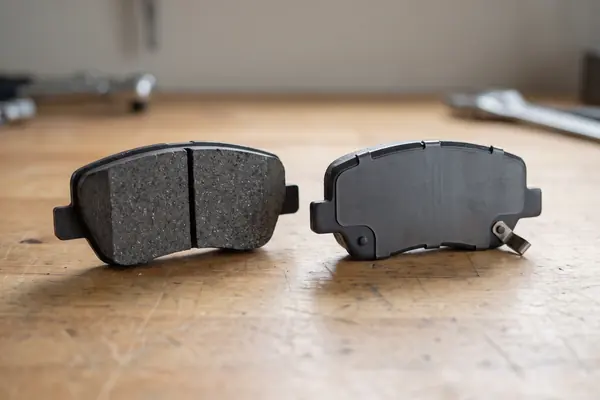
The MOT inspection manual says some pads have metal wear indicators that touch the disc when the pads are excessively worn, making a squealing sound.
Decode a sound soundfxpad
THE SOUND YOUR BRAKES MAKE
Some brake pads are designed to make a noise.
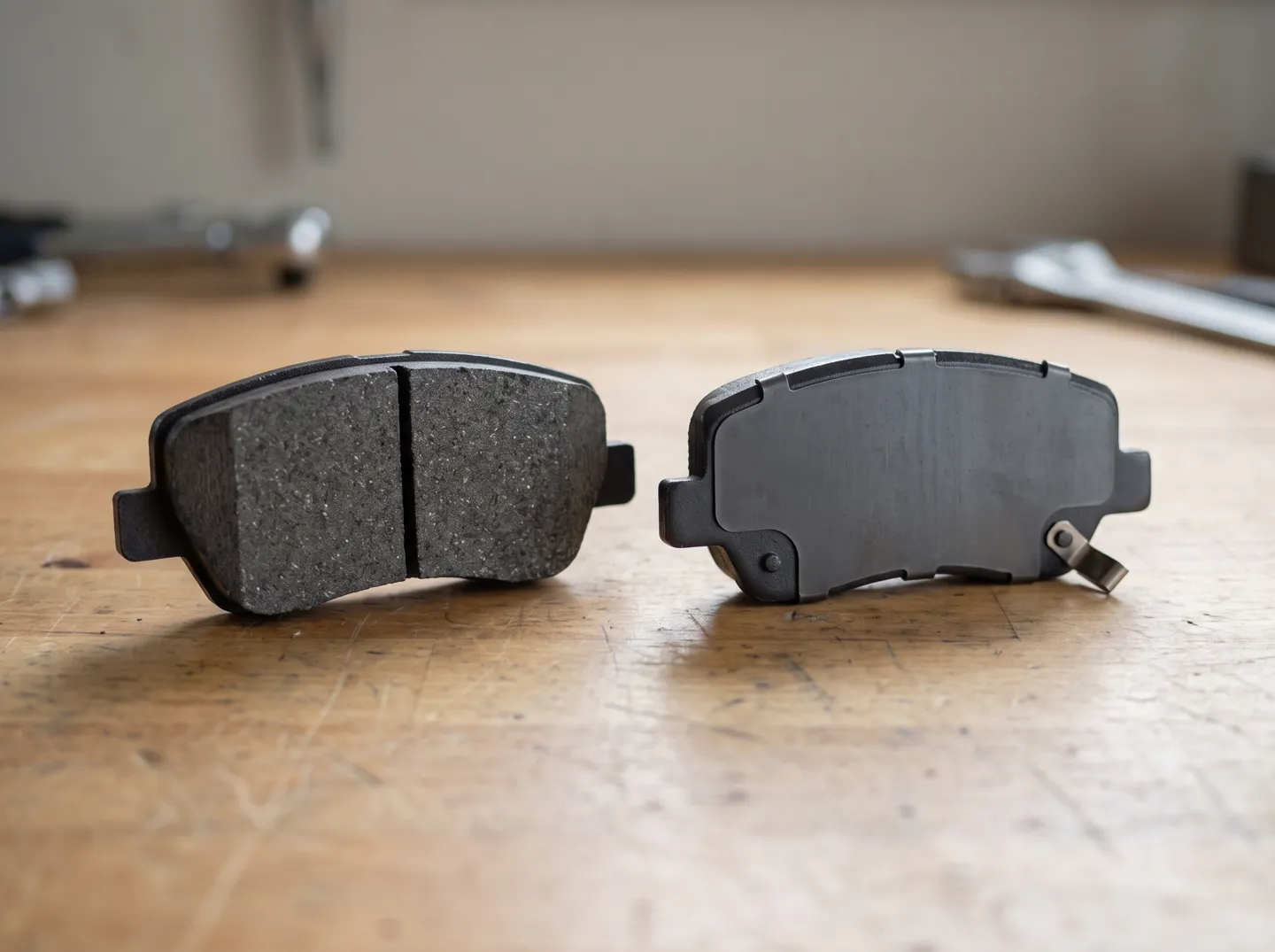
A small metal wear indicator on the pad touches the disc once the friction material has worn down, and you hear it as a squeal. It is a sound effect with a job: telling you the pads need looking at.
LISTEN then get it checked
Decode a brake soundTHE SHORT ANSWER
Brakes turn movement into heat by rubbing a pad on a disc.
Some of that rubbing comes out as sound.
WEAR INDICATOR
The MOT inspection manual says some pads have metal wear indicators that touch the disc when the pads are excessively worn, making a squealing sound.
Decode a soundTHE PHYSICS
Squeal is friction-induced vibration between pad and disc. Researchers class it as low-frequency (1–5 kHz) or high-frequency (6–20 kHz).
See the numbersWATER
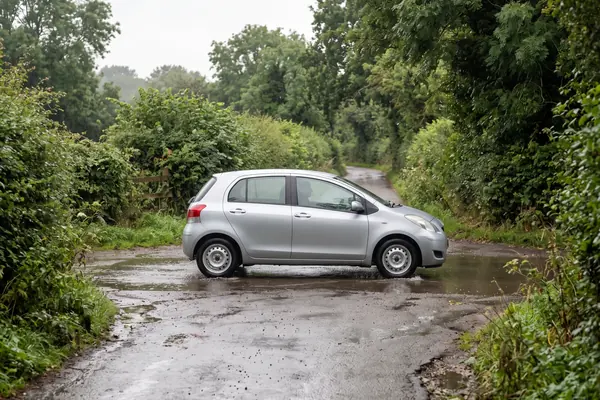
The Highway Code says brakes may be less effective after deep water. Test them gently at the first safe opportunity.
What to do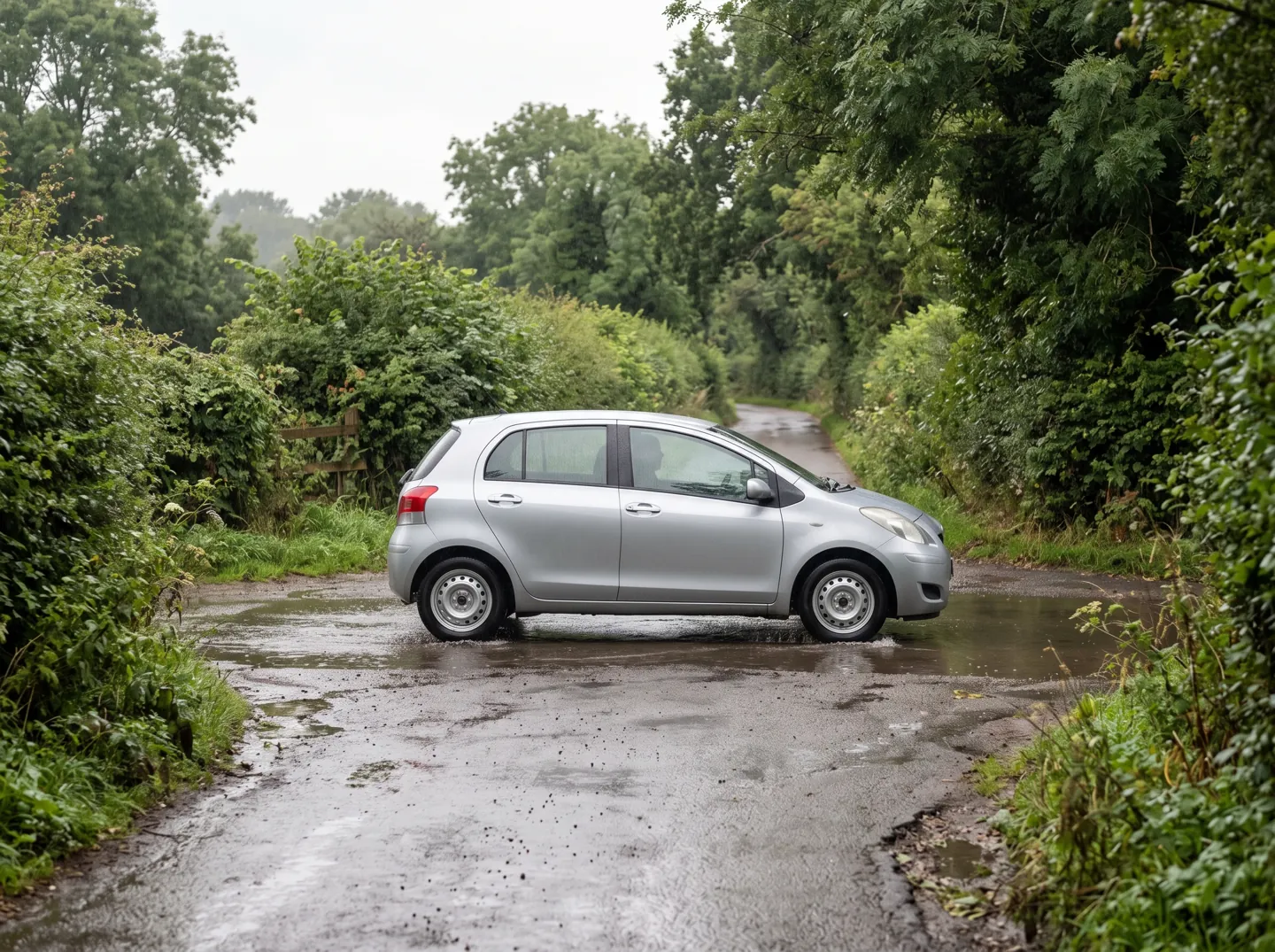
FOUR HABITS FROM THE GUIDANCE
None of these is a repair. They are the everyday checks the Highway Code asks of drivers, and the signs that mean a garage should take a look.
If your pads have metal wear indicators, a squeal can mean they are worn down to the point the MOT counts as a major defect.
The Highway Code says to check fluid levels at least weekly, because low brake fluid may result in brake failure.
Test gently at the first safe opportunity, and use light pressure while driving slowly if they are not fully effective.
Under- or over-inflated tyres adversely affect braking and steering. Check them weekly, when the tyres are cold.
TWO NUMBERS WORTH KNOWING
One figure on the sound,
one on the heat a single stop makes.
1–20 kHz
Frequency band of brake squeal
A 2025 study in the Revista Brasileira de Ensino de Física describes low-frequency squeal at 1 to 5 kHz and high-frequency squeal at 6 to 20 kHz, caused by vibration between pad and disc.
SQUEAL PITCH · RESEARCH
735 kJ
Energy to stop a 1,500 kg car from 70 mph
The UK Air Quality Expert Group worked this example through: in friction brakes, that energy is lost as heat, and about 90% of the heat goes into the disc rather than the pad.
ONE STOP · AQEG
The same AQEG report found that particles from brake, tyre and road-surface wear made up 60% of primary PM2.5 and 73% of primary PM10 emissions from UK road transport, by mass.
DECODE A BRAKE SIGN
Pick a sign to see what UK MOT rules or the Highway Code say about it. The bar shows how urgently the guidance treats it.
Based on the GOV.UK MOT inspection manual (section 1, brakes) and the Highway Code. General information, not a diagnosis: a garage or mechanic should check any brake problem.
WHERE THE PAD GOES
Every stop rubs a little material off the pad and disc. The UK Air Quality Expert Group says brake, tyre and road wear contribute roughly equally to these non-exhaust particles, and half of them are released on urban roads, where there is more braking per kilometre.
Regenerative braking, used fully or partly by electric and hybrid vehicles, does not rely on friction, so AQEG expects lower brake wear emissions from them. It also recommends driving that reduces braking, and lower speeds where traffic flows freely.
Questions
The MOT inspection manual explains that some pads have metal wear indicators. When the pads become excessively worn, the indicator touches the disc and makes a squealing sound. Other pads have a cut that shows wear when it is worn away.
Yes. A pad worn down to its wear indicator is a major defect and a pad worn below 1.5 mm is a dangerous defect. Any major or dangerous defect means the vehicle fails.
The MOT manual says an illuminated brake wear indicator is not, on its own, a reason for failure. The Highway Code still says not to ignore warning displays, as they could indicate a dangerous fault developing.
Highway Code rule 121 says your brakes may be less effective. Test them at the first safe opportunity by pushing gently on the pedal, and if they are not fully effective, apply light pressure while driving slowly to help dry them.
Not necessarily. Researchers describe squeal as vibration between pad and disc that depends on friction, materials and the shape of the parts. But noise can also point to wear, so if in doubt have a garage check the brakes.
Updated
ABOUT THIS NAME
soundfxpad.com is part of the DoodleSale portfolio. It isn't in an auction right now, but you can ask about leasing it.